Red light therapy has gone from obscure biohacking experiment to mainstream wellness tool in less than a decade. But with so much marketing noise, it can be hard to separate the science from the hype. Here's what the research actually shows — and how to use it effectively.
What Is Red Light Therapy?
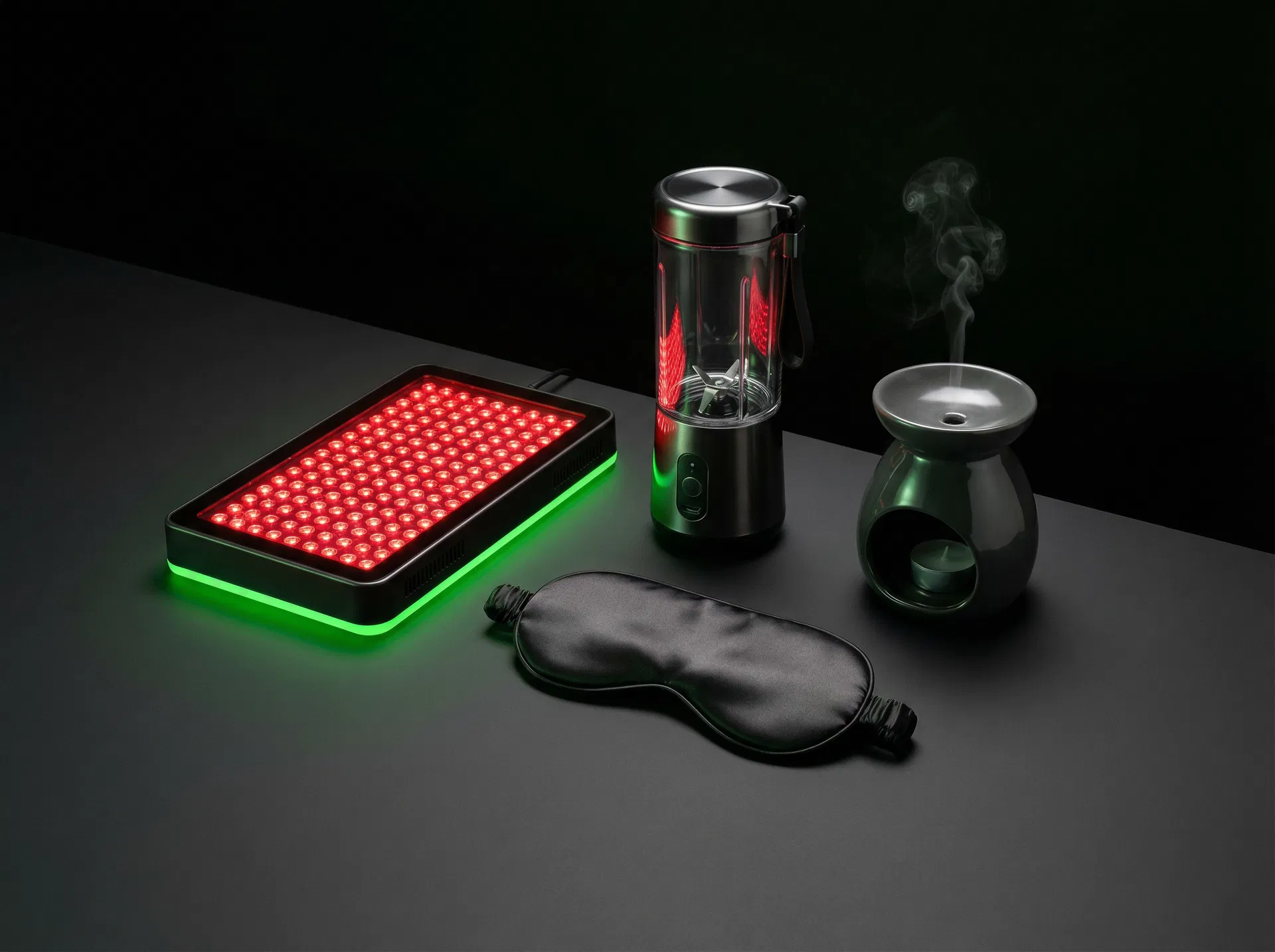
Red light therapy (also called photobiomodulation or LLLT — Low Level Laser Therapy) uses specific wavelengths of red and near-infrared light to penetrate skin and tissue. Unlike UV light (which damages DNA) or heat lamps (which work through thermal effects), red light therapy works at the cellular level through a process called photobiomodulation.
The key wavelengths are 630–680nm (red, penetrates skin surface) and 800–850nm (near-infrared, penetrates deeper into muscle and joint tissue). Quality devices emit both.
The Science: How It Works
The primary mechanism involves cytochrome c oxidase — an enzyme in the mitochondrial electron transport chain. Red and near-infrared light activate this enzyme, increasing ATP (cellular energy) production. Secondary effects include reduced oxidative stress, increased nitric oxide production (improving circulation), and modulation of inflammatory cytokines.
This isn't fringe science. As of 2025, there are over 5,000 peer-reviewed studies on photobiomodulation, with strong evidence for:
- Muscle recovery and reduced DOMS
- Joint pain reduction (particularly knee osteoarthritis)
- Wound healing acceleration
- Improved sleep quality
- Skin collagen production and texture
- Reduced inflammation markers
How to Use It Effectively
Distance: Position the panel 6–12 inches from the target area. Closer isn't always better — the optimal distance depends on the device's power output (irradiance).
Duration: Most protocols call for 10–20 minutes per area, 3–5 times per week. More isn't more — there's a biphasic dose response, meaning too much light can actually reduce effectiveness.
Timing: For recovery, use within 2 hours post-workout. For sleep improvement, use in the morning or early afternoon (avoid within 2 hours of bedtime as it can be stimulating).
Consistency: Benefits accumulate over weeks. Most people notice improvements in recovery and skin quality within 4–8 weeks of consistent use.
What to Look for in a Device
The most important spec is irradiance (power density) measured in mW/cm² at a given distance. Aim for 50–100 mW/cm² at 6 inches. Cheap devices often claim high wattage but deliver poor irradiance due to low-quality LEDs. Look for devices that publish third-party irradiance measurements.
Also check: wavelength accuracy (should be within ±5nm of stated wavelength), EMF output (lower is better), and build quality for long-term durability.
The Bottom Line
Red light therapy is one of the few wellness technologies with genuine scientific backing. It's not a miracle cure, but as part of a consistent recovery and wellness routine, it delivers measurable benefits for most users. The key is consistency and using a quality device with verified irradiance output.